
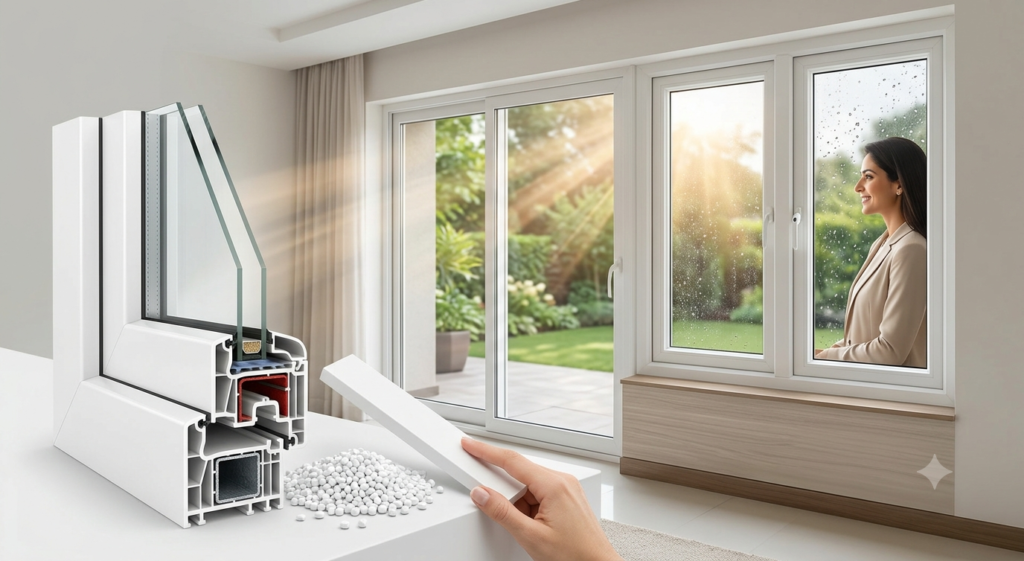
If you have started researching windows and doors for your home, you have almost certainly come across the term uPVC. So what is uPVC, and why has it become the preferred material for windows and doors across Indian homes? This guide breaks it down in plain language, so you can make an informed choice before you buy.
uPVC Meaning and Full Form
uPVC stands for unplasticised polyvinyl chloride. It is a rigid, weather resistant form of PVC that has no plasticisers added to it, which is what gives it strength and long term durability instead of the flexibility you see in soft PVC pipes or cables. Because it is unplasticised, uPVC does not soften, warp, or degrade the way ordinary plastic does when exposed to sun, rain, and humidity over years of outdoor use.
Why uPVC Is Used for Windows and Doors
Traditional window frames were made from wood, steel, or aluminium. Each of these comes with drawbacks in Indian conditions. Wood swells and rots in humidity and needs regular polishing. Steel rusts. Aluminium conducts heat and cold and can feel cold to the touch or expand in extreme sun. uPVC solves these problems because the material itself:
- Does not rust, rot, corrode, or attract termites
- Resists fading and discolouration from UV exposure when manufactured with a UV-stabilised compound
- Provides natural thermal and sound insulation because it does not conduct heat like metal
- Requires no painting or polishing, only occasional cleaning
- Is fully recyclable, making it a more sustainable choice than many alternatives
How uPVC Window Profiles Are Made
At S Craft Windows, uPVC profiles are extruded into hollow, multi-chamber sections rather than solid bars. These internal chambers are what give the profile its strength while keeping it lightweight, and they also trap air pockets that improve insulation. Steel reinforcement is inserted inside the main chambers of the frame and sash to add rigidity, particularly important for larger window and door openings where wind load resistance matters. You can read more about this construction on our uPVC profiles page.
uPVC vs Other Window Materials
When homeowners compare materials, the decision usually comes down to three things: durability, maintenance, and performance against heat, noise, and dust. uPVC consistently performs well on all three because it does not need repainting, does not rust or rot, and its multi-chamber design blocks heat and outside noise more effectively than a single-pane aluminium or wooden frame. This is one reason uPVC has become the standard choice in premium residential and villa projects across Hyderabad and other Indian cities.
Is uPVC Safe and Environment Friendly
A genuine concern homeowners raise is whether uPVC is safe indoors. Reputable manufacturers use lead-free uPVC compounds specifically for this reason, replacing older lead-based stabilisers with calcium-zinc based systems. Always ask your supplier whether their profile is certified lead-free, since this affects both indoor air quality and long term recyclability.
Choosing the Right uPVC Supplier
Not all uPVC profiles are equal. The quality of the compound, the number of chambers, the wall thickness, and the steel reinforcement all affect how the window performs over its 20 to 25 year lifespan. Homeowners should ask their fabricator which profile brand is being used, request to see the chamber cross-section, and confirm certification. S Craft Windows manufactures and supplies profiles through a verified dealer-fabricator network, so you get consistent quality regardless of which city you are in.
Frequently Asked Questions
Is uPVC better than aluminium for windows? uPVC generally offers better thermal and sound insulation than standard aluminium frames because it does not conduct heat, while aluminium frames need thermal breaks to match that performance.
Does uPVC turn yellow over time? A quality UV-stabilised uPVC profile is designed to resist yellowing for many years. Lower grade or recycled compounds are more prone to discolouration, which is why the source of the profile matters.
How long do uPVC windows last? With proper installation, uPVC windows typically last 20 to 25 years or more with minimal maintenance.
Can uPVC windows be customised in colour? Yes, uPVC profiles are available in laminated finishes including wood textures and solid colours in addition to standard white.
Ready to see uPVC profiles in person? Get a free quote from S Craft Windows and speak to our team about the right window solution for your home.