
Choosing between upvc vs aluminium windows is one of the most common decisions homeowners face when building or renovating. Both materials have a place in modern construction, but they perform differently in Indian climate conditions. Here is an honest, side by side comparison to help you decide.
Thermal Insulation
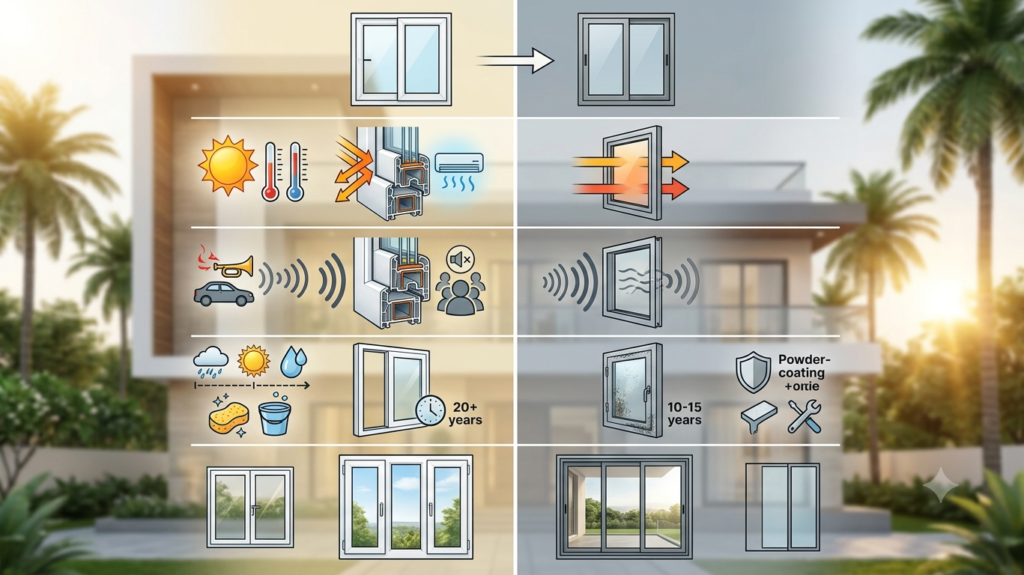
uPVC is a poor conductor of heat by nature, and when combined with a multi-chamber profile design, it significantly slows heat transfer between the outside and inside of your home. Standard aluminium, on the other hand, conducts heat readily, which means aluminium frames without a thermal break can feel hot to the touch in summer and can contribute to heat entering the room. This makes uPVC generally the stronger choice for homes that rely on air conditioning and want to reduce cooling costs.
Soundproofing
Sound insulation depends on the combination of frame material, glazing, and gasket sealing. uPVC’s chambered structure combined with EPDM gasket seals and double glazed glass tends to outperform standard aluminium frames for noise reduction, which matters for homes near main roads or in dense urban areas.
Durability and Maintenance
Aluminium does not rot or warp, but it can corrode over time, particularly in coastal or high pollution environments, unless it is powder coated and well maintained. uPVC does not rust or corrode and requires no repainting, only periodic cleaning. Both materials are considered low maintenance compared to wood, but uPVC generally needs less upkeep over a 20 year period.
Strength and Slim Sightlines
Aluminium is stronger per unit of thickness, which allows for slimmer frame profiles and larger uninterrupted glass areas, a look often preferred in modern architectural facades and large sliding doors. uPVC frames are typically bulkier because of the multi-chamber design needed for insulation and reinforcement. If your priority is a minimal, glass-forward aesthetic on very large openings, aluminium may suit the design better.
Cost Comparison
Entry level aluminium windows can be less expensive than uPVC, but premium thermally broken aluminium systems that match uPVC’s insulation performance are usually priced higher than standard uPVC. For most residential budgets, uPVC delivers a stronger balance of insulation, soundproofing, and price.
Which One Should You Choose
If your priority is thermal comfort, noise reduction, and low maintenance for a residential home, uPVC windows are generally the better fit, which is why they have become the dominant choice for villas and apartments across Hyderabad and other Indian cities. If your project demands very large glass spans or a specific slim frame architectural look, thermally broken aluminium may be worth evaluating alongside uPVC. Many premium homes now use a combination, uPVC for regular windows and aluminium or glass systems for large statement openings.
What to Check Before You Decide
Regardless of which material you choose, ask about the profile or frame specification, the glass type (single or double glazed), the hardware and locking system, and the warranty offered. A well specified window in either material will outperform a poorly specified one in the same material.
Frequently Asked Questions
Is uPVC cheaper than aluminium? Standard uPVC windows are generally competitive with or less expensive than premium thermally broken aluminium systems, though pricing varies by profile grade, glazing, and supplier.
Which is better for noisy areas, uPVC or aluminium? uPVC combined with double glazing typically offers better sound insulation than standard aluminium frames due to its chambered structure and gasket sealing.
Do aluminium windows rust? Aluminium does not rust like steel, but it can corrode if not properly powder coated, particularly in coastal or high humidity environments.
Can uPVC windows support large glass panels like aluminium? uPVC can support reasonably large panels for standard residential openings, but for very large glass spans, reinforced aluminium or hybrid systems are often preferred.
Talk to S Craft Windows for a free comparison and quote tailored to your home’s requirements.