
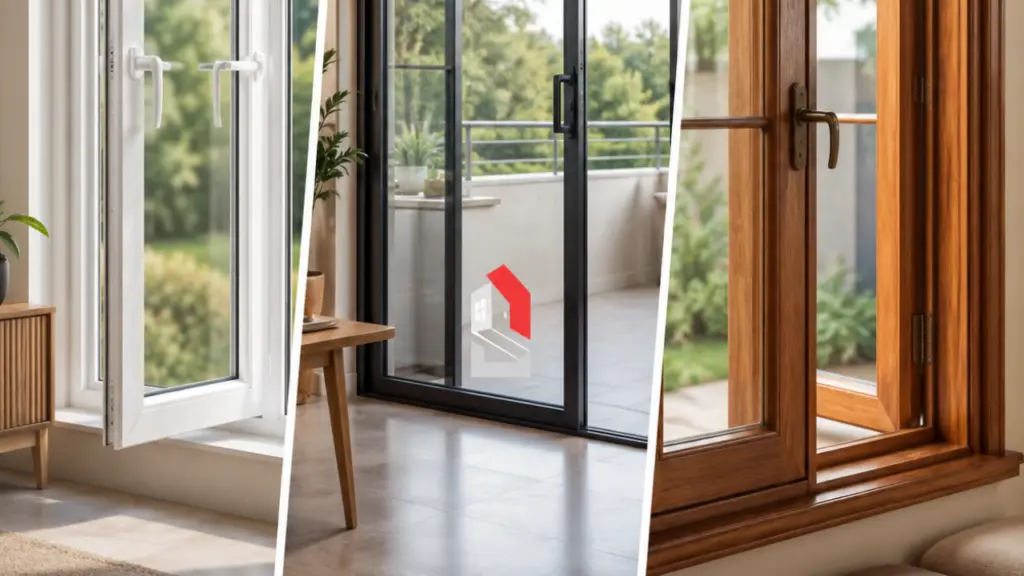
Choosing the right windows is one of the most important decisions when building or renovating a home. The material you choose affects your home’s comfort, energy efficiency, maintenance costs, and overall appearance for decades.
Today, homeowners mainly choose between uPVC, aluminium, and wood windows. While each material has its advantages, the best choice depends on your climate, budget, maintenance expectations, and long-term goals.
In this guide, we’ll compare uPVC vs aluminium vs wood windows across the factors that matter most to Indian homeowners.
Quick Comparison: uPVC vs Aluminium vs Wood Windows
| Feature | uPVC Windows | Aluminium Windows | Wood Windows |
|---|---|---|---|
| Lifespan | 25–30+ Years | 20–30 Years | 10–20 Years |
| Heat Insulation | Excellent | Poor | Good |
| Noise Reduction | Excellent | Moderate | Good |
| Maintenance | Very Low | Low | High |
| Termite Resistance | Yes | Yes | No |
| Weather Resistance | Excellent | Good | Moderate |
| Energy Efficiency | Excellent | Low | Good |
| Cost of Ownership | Lowest | Medium | Highest |
| Appearance | Modern & Woodgrain Options | Modern & Slim | Traditional & Natural |
What Are uPVC Windows?
uPVC (Unplasticized Polyvinyl Chloride) is a strong, rigid material specifically designed for window and door systems. Unlike traditional PVC, it contains no plasticizers, making it highly durable and suitable for structural applications.
Modern uPVC windows feature multi-chamber profiles, weather seals, reinforced steel sections, and advanced locking systems. They are designed to withstand India’s harsh climate while delivering excellent thermal and acoustic insulation.
uPVC vs Aluminium vs Wood Windows: Detailed Comparison
1. Durability and Lifespan
When investing in windows, longevity matters.
High-quality uPVC windows can easily last 25 to 30 years or more without rusting, rotting, or warping. Aluminium also offers a long lifespan but may experience coating wear in coastal or high-humidity environments.
Wood windows are the most vulnerable to moisture, termites, and weather-related damage. Without regular maintenance, timber frames can deteriorate significantly over time.
Winner: uPVC Windows
2. Thermal Insulation and Energy Efficiency
Indian summers can be extremely demanding, especially in cities like Hyderabad, Chennai, and Bengaluru.
uPVC naturally acts as an insulator and helps reduce heat transfer between indoor and outdoor spaces. This keeps interiors cooler and reduces the workload on air conditioners.
Aluminium is a highly conductive metal, allowing heat to pass through easily. Unless thermal break technology is used, aluminium windows offer limited insulation.
Wood performs better than aluminium but generally requires more maintenance to maintain its efficiency.
Winner: uPVC Windows
3. Sound Insulation
If your home is located near busy roads, commercial areas, schools, or construction zones, noise reduction becomes important.
The multi-chamber design of uPVC profiles helps absorb and reduce external noise. Combined with quality glazing, uPVC windows can significantly improve indoor comfort.
Aluminium windows generally offer lower sound insulation unless paired with specialized glass systems.
Wood provides reasonable acoustic performance but can develop gaps over time due to expansion and contraction.
Winner: uPVC Windows
4. Maintenance Requirements
One of the biggest reasons homeowners switch to uPVC is maintenance.
uPVC windows require only occasional cleaning with mild soap and water. No painting, polishing, or sealing is required.
Aluminium windows require periodic cleaning and may need coating touch-ups after years of exposure.
Wood windows demand regular sanding, polishing, painting, and termite treatment to maintain their appearance and performance.
Winner: uPVC Windows
5. Weather Resistance
Indian homes experience intense sunlight, heavy monsoons, humidity, and dust.
uPVC windows are specifically designed to resist moisture, corrosion, UV exposure, and extreme weather conditions.
Aluminium performs well in most climates but can become extremely hot during summer months.
Wood absorbs moisture and is more susceptible to swelling, cracking, and decay in humid environments.
Winner: uPVC Windows
6. Security and Safety
Security depends on both the frame material and the locking system.
Modern uPVC windows use reinforced steel profiles and multi-point locking systems, offering excellent protection.
Aluminium and wood windows can also provide strong security when fitted with quality hardware.
For residential applications, all three can be secure, but uPVC delivers long-term reliability without requiring ongoing maintenance.
Winner: Tie
7. Appearance and Design Options
Wood remains the preferred choice for homeowners seeking a traditional and natural appearance.
Aluminium is popular in modern architecture due to its slim sightlines and contemporary look.
Today’s premium uPVC windows are available in white, grey, black, and realistic woodgrain finishes such as Golden Oak, Walnut, and Mahogany, providing the beauty of wood without the maintenance.
Winner: Depends on Personal Preference
8. Long-Term Cost of Ownership
The initial cost of windows is only part of the investment.
Wood windows often require ongoing expenses for painting, polishing, termite treatment, and repairs.
Premium aluminium systems with thermal breaks can be significantly more expensive.
uPVC windows offer one of the lowest lifetime ownership costs because they require minimal maintenance while delivering excellent durability and energy efficiency.
Winner: uPVC Windows
Why Most Indian Homeowners Choose uPVC Windows
For the majority of residential projects, uPVC offers the best balance of:
- Energy efficiency
- Noise reduction
- Weather resistance
- Termite protection
- Low maintenance
- Long lifespan
- Excellent value for money
This is especially important in Indian cities where homes face high temperatures, humidity, dust, and heavy rainfall throughout the year.
Why Choose S Craft Windows?
At S Craft Windows, we manufacture premium uPVC profiles and window systems in Hyderabad using advanced manufacturing technology.
Our products are:
- CIPET Certified
- ISO Certified
- Lead-Free
- UV Resistant
- Designed for Indian Weather Conditions
- Backed by a 25-Year Performance Guarantee
Whether you’re building a new home or upgrading existing windows, S Craft Windows delivers long-lasting performance, comfort, and peace of mind.
Frequently Asked Questions
Which is better, uPVC or aluminium windows?
For most Indian homes, uPVC windows provide better insulation, noise reduction, and lower maintenance compared to standard aluminium windows.
Are uPVC windows stronger than wooden windows?
Yes. Reinforced uPVC windows offer excellent structural strength while being resistant to termites, moisture, and weather damage.
Which window material lasts the longest?
High-quality uPVC and aluminium windows can both last 25–30 years or more. However, uPVC requires significantly less maintenance during that period.
Are uPVC windows suitable for Indian weather?
Absolutely. uPVC windows are designed to withstand heat, humidity, monsoons, and UV exposure, making them ideal for Indian climatic conditions.
Do uPVC windows look like wood?
Yes. Modern uPVC profiles are available in realistic woodgrain finishes such as Golden Oak, Walnut, and Mahogany.